Archway is built on the principle that FDEs should never handle customer credentials. Encryption, isolation, and access control are foundational — not bolted on.
Start free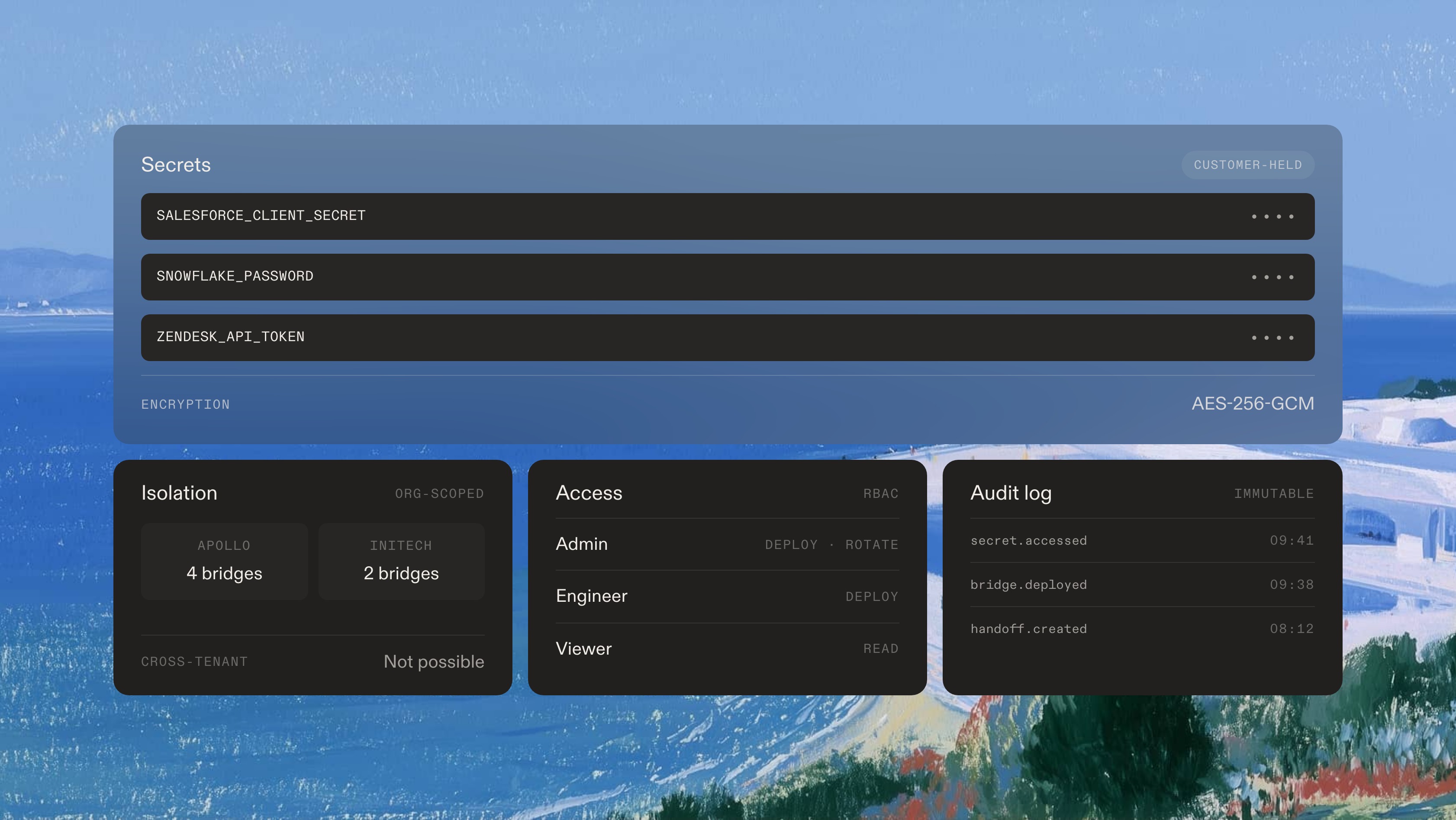
Encryption, isolation, and a blocked deploy when the scan fails
Customer secrets are encrypted at rest with per-organization derived keys, and ciphertext is stored apart from key material. Values are decrypted in memory only while a bridge runs, and never written to logs.
Your engineers reference secrets by name and never see or transmit the values. Credentials flow straight from the customer's portal into encrypted storage, and the dashboard shows only metadata and status.
Every bridge is scanned before it deploys, for hardcoded credentials, injection, unsafe API patterns, and unvalidated input. Anything flagged blocks the deploy until it's resolved.
Every query is scoped to the caller's organization, so cross-tenant access isn't architecturally possible. Bridges, secrets, customers, and invocation logs stay fully separate.
Control who can create, deploy, and manage bridges, and who reviews each deployment. Every action, from login to secret rotation, lands in an immutable audit log.
Each bridge runs in its own sandbox, with no access to the host filesystem, network stack, or other bridges. Runs are time-limited by configurable timeouts.